A structured Arabic journey your child can actually follow
Nanour teaches Modern Standard Arabic through live 1:1 lessons, clear levels, tutor feedback, and parent updates after every lesson. Your child starts at the right level and moves forward when they are ready.
- 8 clear levels
- Live 1:1 tutors
- Parent updates after every lesson
Free 20-minute trial. No payment required.
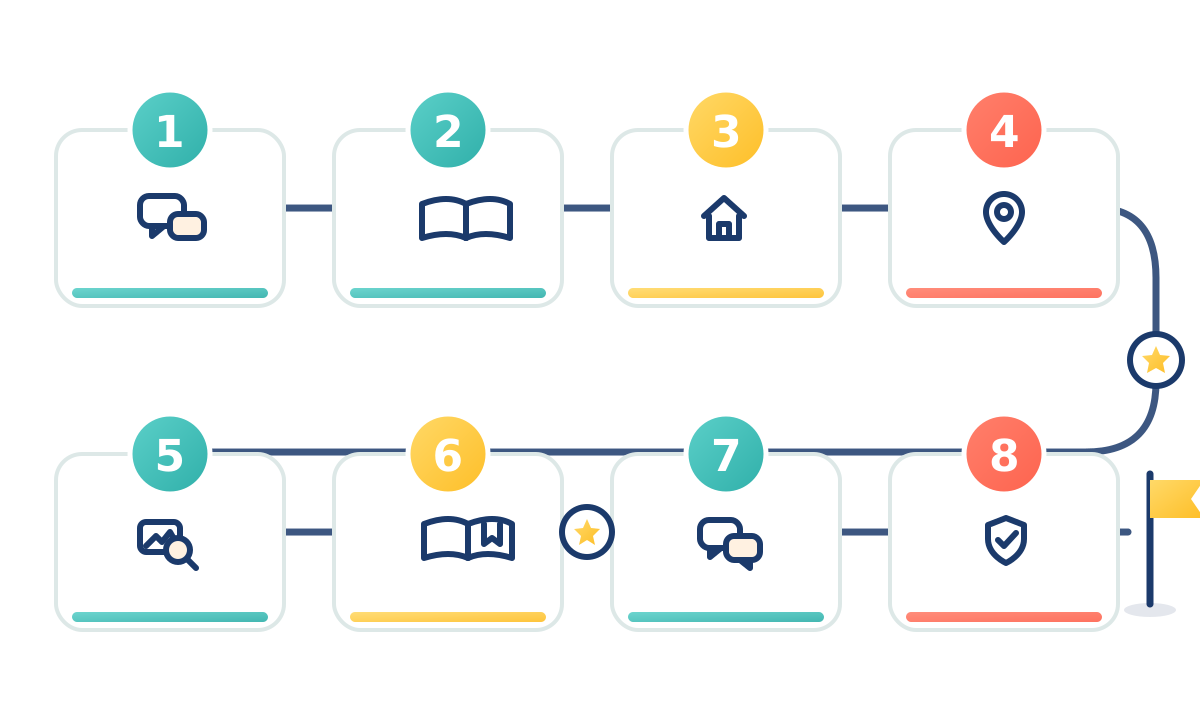

Your child's 8-level Arabic journey
Every level builds on the one before. Your child moves forward when they are ready, with speaking, listening, reading, and writing developing together.
Levels 1 and 2 are taught today. Levels 3 to 8 are being written with our Arabic reviewers.
- 1
Level 1 — First words and the Arabic alphabet
By the end of this level, your child can recognise Arabic letters, read simple syllables, greet others, count to ten, and copy short words.
- 2
Level 2 — Reading and writing simple words
By the end of this level, your child can read short familiar words, write simple words, ask basic questions, and hold a short familiar conversation.
- 3
Level 3 — Family, home, and everyday life
By the end of this level, your child can talk about family, home, daily routines, likes and dislikes, and familiar objects.
- 4
Level 4 — Time, places, and the present tense
By the end of this level, your child can describe where things are, talk about time, use simple present-tense phrases, and understand everyday instructions.
- 5
Level 5 — Describing the world around us
By the end of this level, your child can describe people, places, feelings, weather, objects, and everyday situations in more detail.
- 6
Level 6 — Telling stories in Arabic
By the end of this level, your child can follow simple stories, retell events, describe what happened, and connect ideas in Arabic.
- 7
Level 7 — Real conversations and reading
By the end of this level, your child can hold more natural conversations, read longer texts, and express opinions on familiar topics.
- 8
Level 8 — Confident Arabic across topics
By the end of this level, your child can discuss a wider range of topics, read with growing independence, and use Arabic with more confidence and accuracy.
Lessons are structured, but never rigid. Tutors adapt the pace so your child feels supported, not rushed.
A closer look at Level 1
Level 1 is where most children begin. Across 49 short lessons in four stages, your child moves from their very first Arabic sounds to reading simple words. It is the longest level by design — secure letter knowledge is the foundation everything after it builds on.
49 lessons · 4 stages
- 1
Getting started
First sounds, right-to-left reading, and how the Arabic script works.
- 2
The 28 letters
Every letter’s name, sound, and joined shapes, introduced a few at a time.
- 3
Short vowels and reading
The harakat vowel marks, then blending letters into simple syllables.
- 4
Putting it together
Reading familiar words, greeting others, and counting from one to ten.

By the end of Level 1, your child can:
- Recognise and name all 28 Arabic letters.
- Read simple two- and three-letter syllables with short vowel marks.
- Greet someone and say their own name in Arabic.
- Count aloud from one to ten.
- Copy-write letters and short syllables by hand.
What happens in a Nanour lesson?
Each lesson follows a simple structure, so your child knows what to expect and your tutor can keep learning focused, warm, and engaging.
Letters م and ن
- 1
Warm-up
The tutor reviews familiar sounds, words, or phrases.
- 2
New learning
Your child learns a new letter, word pattern, sentence structure, or speaking skill.
- 3
Guided practice
The tutor helps your child practise through reading, speaking, writing, games, or visual activities.
- 4
Review and next step
The tutor checks understanding and sends a parent update after the lesson.
The four skills your child builds
Arabic is not only about memorising letters. Nanour helps children build the skills they need to understand, use, and enjoy the language.
Speaking
Take part in real conversations and express ideas in Arabic.
Listening
Understand and respond to spoken Arabic in everyday situations.
Reading
Read words, sentences, and stories with understanding.
Writing
Write letters, words, and sentences with growing accuracy.
Your child starts where they are, not where their age says they should be
Some children already understand Arabic but cannot read it. Some can read letters but struggle to speak. Some are complete beginners. Nanour checks your child's starting point before paid lessons begin, then the tutor confirms the level during the first lesson.
- 1
Tell us about your child
Age, confidence, exposure to Arabic, how your child learns best, and any support needs.
- 2
Complete a short diagnostic
A gentle activity checks recognition, speaking, listening, and early reading.
- 3
Tutor confirms the level
The tutor checks the placement during the first lesson.
- 4
Move up when ready
Children progress by skill and confidence, not by age or school year.
How Nanour is different
Ordinary tutoring · Nanour
You will always know what your child is learning
After every lesson, you receive a clear summary of what your child practised, what went well, what was difficult, and what to practise next. You do not need to speak Arabic to understand your child's progress.
This means you are never left wondering whether lessons are working.
What Nanour teaches and what we do not teach
We teach Modern Standard Arabic
Modern Standard Arabic is the shared form of Arabic used across the Arab world in books, schools, media, writing, and formal communication. Nanour teaches reading, writing, listening, and speaking, with a focus on building real fluency over time.
We do not currently teach
Nanour does not currently teach specific dialects such as Moroccan, Egyptian, Levantine, or Gulf Arabic. We also do not currently teach Quranic recitation, tajweed, or hifz.
Families can still combine Nanour with dialect exposure at home or religious learning elsewhere.
Curriculum questions
Will this work if my child is a complete beginner?
Yes. Many children start with no Arabic. We begin with sounds, letters, greetings, and simple everyday words.
My child understands Arabic but cannot read or write. Is Nanour suitable?
Yes. Children are placed by skill, not age. A child may be stronger in listening than reading, and the tutor will start from the right point.
Do you teach Moroccan Arabic or other dialects?
Not yet. Nanour currently teaches Modern Standard Arabic. Dialects may be added later.
Do you teach Quran, tajweed, or hifz?
No. Nanour is focused on Arabic language learning, not religious instruction.
How do I know my child is progressing?
You receive a parent update after every lesson, showing what was practised, what went well, what was difficult, and what to practise next.
How does my child move up a level?
Children move up when they show confidence across the relevant skills for that level.
What if the level is too easy or too hard?
The tutor can adjust the level after the first lesson. The aim is for your child to feel challenged but not overwhelmed.
Do parents need to speak Arabic?
No. Parent updates are written clearly so you can follow your child's progress even if you do not speak Arabic.

Find your child's right Arabic level
Join the waiting list and we'll email you once when free 20-minute trial booking opens. In the trial, we will help identify where your child should start.
Join the waiting listNo payment. No commitment.